

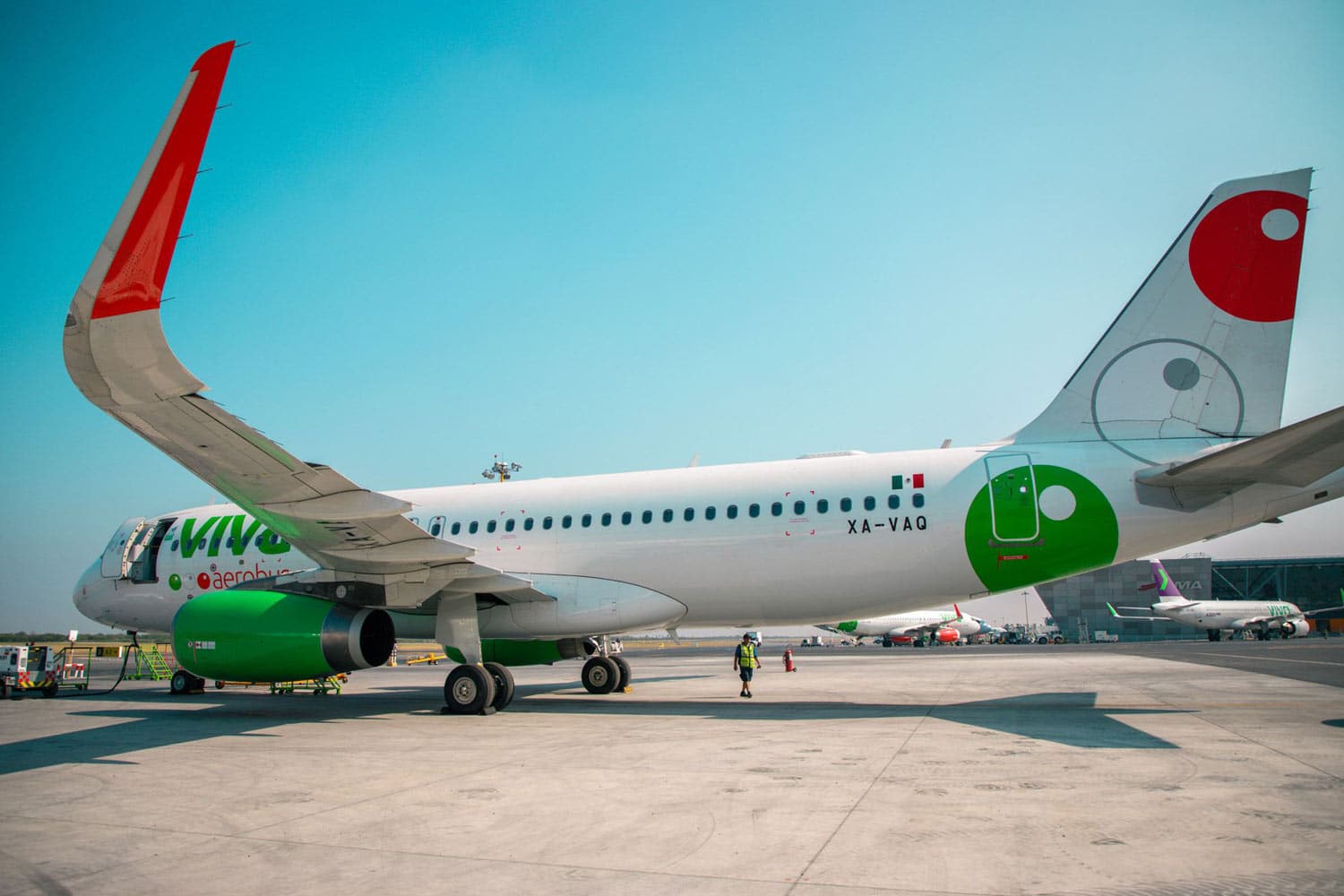
Mexican low-cost carrier Viva, formerly Viva Aerobus, has selected the multi-orbit connectivity offered by Luxembourg-based satellite operator SES for its fleet of Airbus single-aisle aircraft. The contract covers a total of 100 aircraft (60 A320/A320neo and 40 A321/A321neo), which will be progressively equipped over the next few years.
However, the service has already been launched and activated by the Mexican airline, with a first tranche of aircraft already equipped (see A320 in photo). The single-aisle aircraft feature a low-drag ESA (electronically steered array) phased-array antenna (less than 7 cm thick).
This connectivity is based on SES’s multi-orbit architecture, combining satellites in geostationary orbit (GEO) and low-Earth orbit (LEO) to offer high-speed in-flight connectivity across Viva’s entire network, including routes with little terrestrial infrastructure coverage. In particular, the company is targeting its domestic routes in Mexico and its international routes in the Americas.
“Viva passengers will soon benefit from reliable multi-orbit satellite connectivity, giving them the same fast, high-performance Internet access as at home, wherever they are and at any time of the day. SES’ partnerships with fast-growing airlines such as Viva illustrate the pioneering role played by airlines on the American continent when it comes to cutting-edge connectivity. SES is the driving force behind this in-flight connectivity, a trusted partner that simplifies flight operations,” announced Mike DeMarco, President of the Mobility Division at SES.
Several other airlines have already chosen SES multi-orbit connectivity, with 600 aircraft already connected (e.g. the Abra Group airlines). Next in line are Japan Airlines (selected A350-900 and 787-9 aircraft) and Riyadh Air (with NSG Skywaves for its future A321neo aircraft).


