

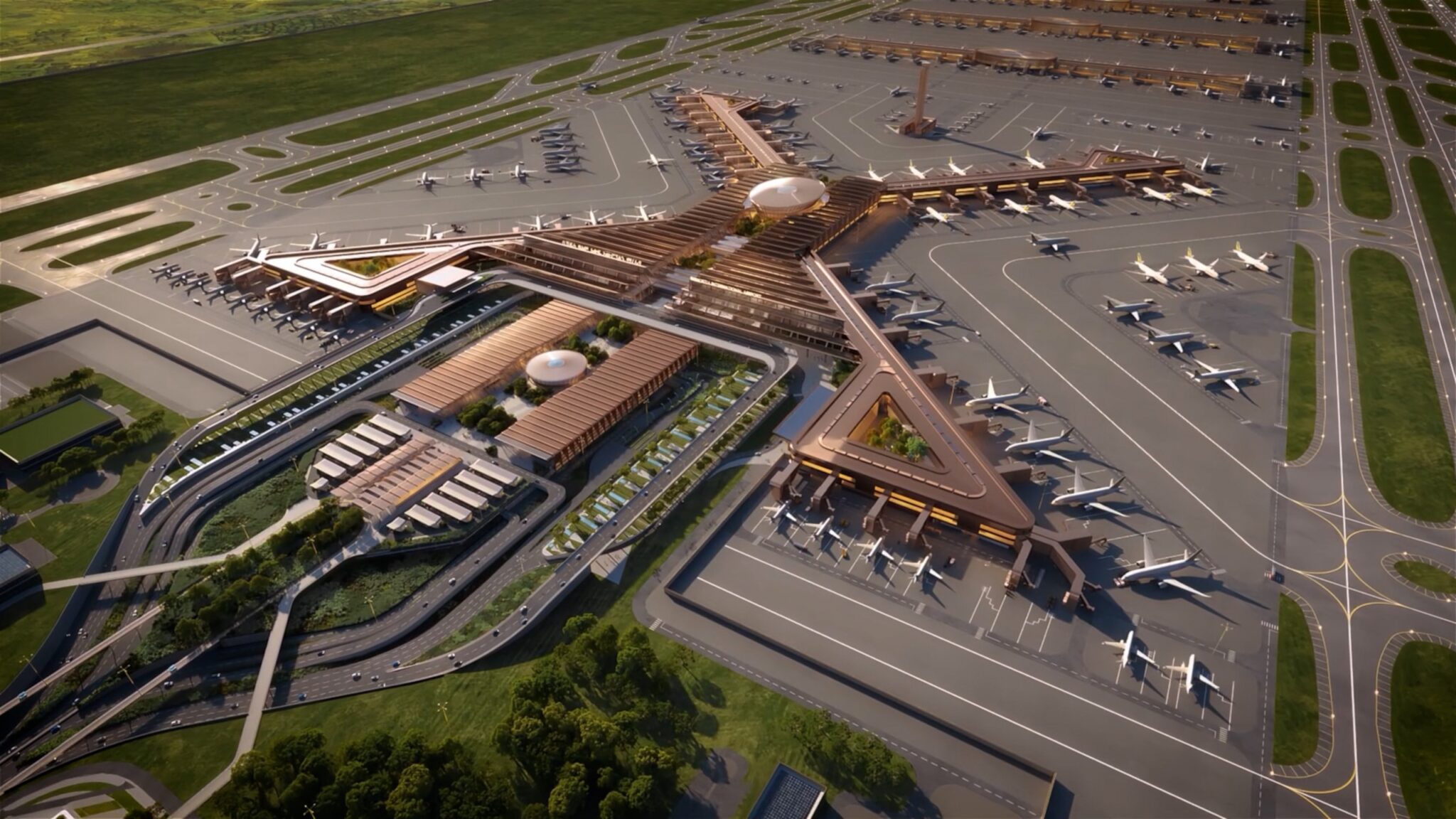
Ethiopian Airlines officially broke ground on January 10, 2026, on the construction of Bishoftu International Airport (BIA), a new airport to be built about 45 km southeast of Addis Ababa, the Ethiopian capital.
Valued at US$12.5 billion, the project is presented by the authorities as the largest airport on the African continent once it reaches its full planned capacity.
The groundbreaking ceremony was attended by Prime Minister Abiy Ahmed, several ministers, federal administration representatives, project stakeholders, and members of the Ethiopian Airlines management team, including its CEO Mesfin Tasew.
The national flag carrier, the largest airline in Africa, has been entrusted with the overall design of the new airport, which will be located in the city of Bishoftu, in the Oromia region.
“With the groundbreaking of Bishoftu International Airport, we are opening a new chapter that will redefine the continent’s aviation ecosystem. As we celebrate 80 years of service, this project marks a major milestone, underscoring our commitment to shaping the future of African air transport while meeting growing demand for our passenger and cargo services,” said Mesfin Tasew.
According to Ethiopian authorities, Bishoftu International Airport will eventually feature four parallel runways, parking stands for around 270 aircraft, and an annual capacity of 110 million passengers — more than four times the current capacity of Addis Ababa Bole International Airport.
The first phase, expected to be completed around 2030, aims for an initial capacity of about 60 million passengers per year, with a passenger terminal covering roughly one million square meters.
The Ethiopian government notes that Bole Airport is expected to reach its capacity limits within the next two to three years, reinforcing the need for this new infrastructure, which is designed to become the country’s primary hub. Bishoftu Airport will help ease congestion in Addis Ababa and strengthen Ethiopia’s position as a key connecting platform between Africa, Europe, the Middle East, and Asia.


